Entry 051 · Nethercutt Collection · 1937
The 1937 Canadian Pacific Royal Hudson 2860, the steam locomotive that carried a King across a continent.
Built by Montreal Locomotive Works in 1937. Class H1e Hudsons pulled the 1939 royal train of King George VI and Queen Elizabeth 3,224 miles across Canada without a single mechanical failure, and were granted the title Royal Hudson by permission of the King himself.
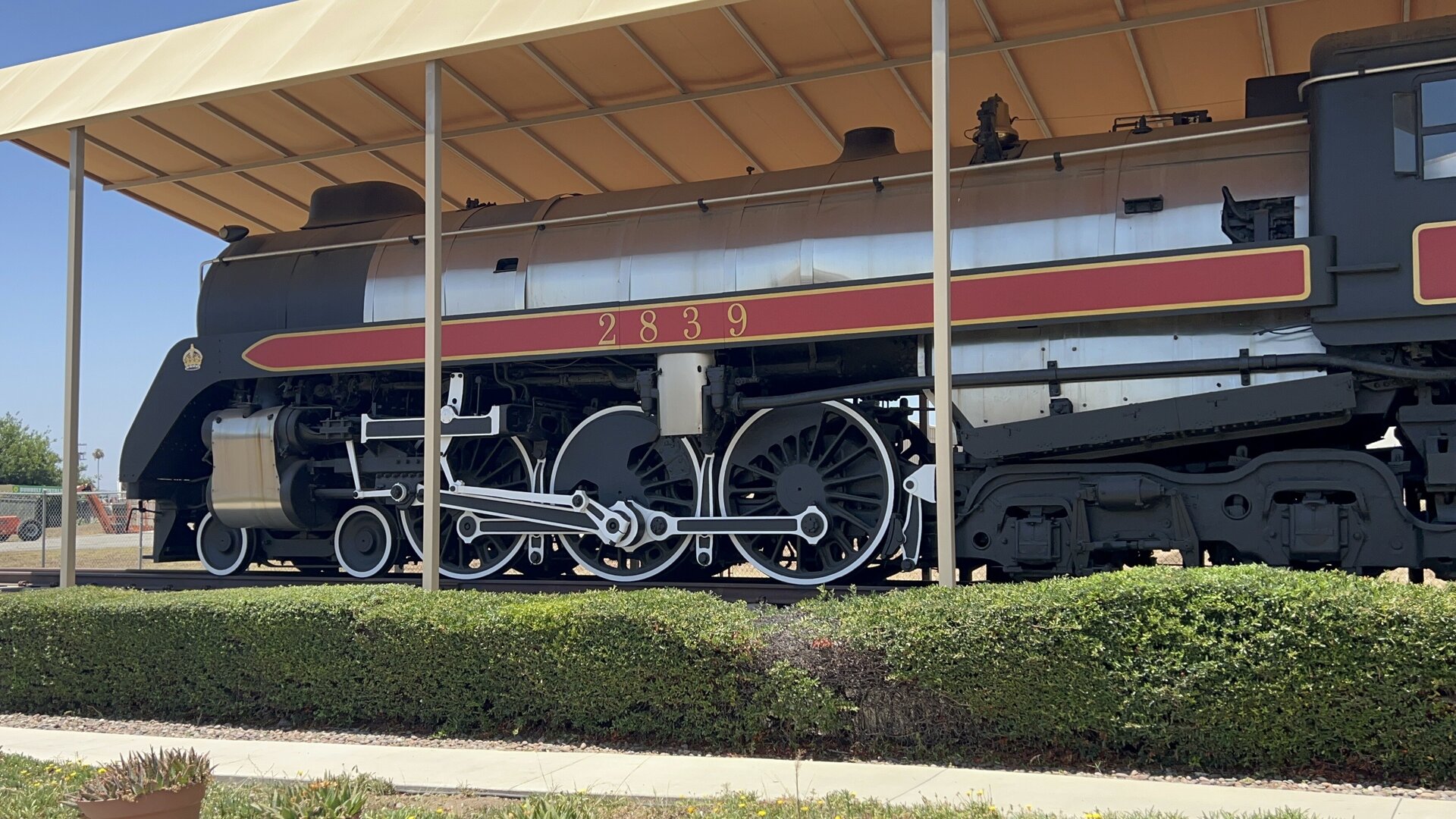
The 1937 Canadian Pacific Royal Hudson 2860 is a Class H1e semi-streamlined 4-6-4 steam locomotive built by the Montreal Locomotive Works. In 1939 five members of this class hauled the royal train of King George VI and Queen Elizabeth across Canada, 3,224 miles, without a single mechanical failure. The King granted the class the title Royal Hudson by royal warrant. It is the only locomotive class in North America ever granted that honor.
The Hudson wheel arrangement.
A 4-6-4 has four leading wheels, six driving wheels, and four trailing wheels. The layout was introduced by the New York Central in 1927 for its Hudson Division, hence the name. Six large drivers gave high sustained speed. The four-wheel trailing truck carried a much larger firebox than the earlier Pacific 4-6-2, which allowed higher steaming rates and therefore higher horsepower at speed. Canadian Pacific ordered its first Hudsons in 1929 and built 65 of them through 1940. The Royal Hudsons of the H1e class from 1937 were the ones with the semi-streamlined skirt over the cylinders and the bullet-nose smokebox door.
Specifications you can read off the plate.
Cylinders 22 by 30 inches. Drivers 75 inches. Boiler pressure 275 psi. Tractive effort 45,300 pounds. Total engine and tender weight roughly 297 tons. Coal capacity 47,000 pounds. Water capacity 12,000 gallons. Top service speed 90 mph on level track. Route range from Montreal to Vancouver, with helpers over the Selkirk Mountains west of Calgary and through Kicking Horse Pass.
The 1939 royal tour.
On 15 May 1939 King George VI and Queen Elizabeth boarded a specially prepared 12-car train at Quebec City. It ran the full length of Canada to Victoria and back, 29 days, and returned to Halifax on 15 June. The Royal Hudsons pulled the train from Quebec to Vancouver. The locomotives carried the royal coat of arms on the running boards on either side of the smokebox, painted in gold leaf. After the tour the crown was retained permanently on the H1d and H1e Hudsons, and the class was renamed Royal Hudson by order of the King. That decoration is still on the surviving Royal Hudsons today.
The locomotive as statecraft.
A royal train is not transportation. It is a moving embassy. It has to arrive on time to a platform where thousands of people are waiting, it has to protect the sovereign, it has to be seen, and it has to not break down. The choice to entrust that mission to a locomotive is a public bet on the machine's reliability. Canadian Pacific bet on the H1e and won 3,224 times in a row. That is why the class carries the crown. It earned it operationally.
The through-line.
A Royal Hudson is what happens when a country decides that transportation infrastructure is worth doing to the highest possible standard. That is the same argument Outonomous makes today: the vehicles already on the road are the infrastructure. Give them a perception layer that never fails, and they carry the crown of safety on every trip. 100 million lives saved is the operational bet.
"A machine earns its name by doing the job under the highest possible pressure without failing. The Royal Hudson earned its name 3,224 miles in a row. That is the bar."
Omar Mukhtar, field note
Background reading
For further reading: search the public record for 1937 Canadian Pacific Royal Hudson 2860, and visit the Nethercutt Collection, where Omar studied and photographed this material first-hand.
Copyright
Photographs © 2026 Outonomous. All rights reserved. Image rights are held by Outonomous and may not be reproduced without written permission.