Entry 032 · Nethercutt Collection · Field study
The David Winter Cottages, the world's most collected miniature English houses.
David Winter sculpted hand-cast miniature English cottages from 1979 until his death in 2016. More than six million pieces sold, a collectors' guild of over 100,000 members, and a body of work that turned a Yorkshire studio into the reference standard for miniature architecture.
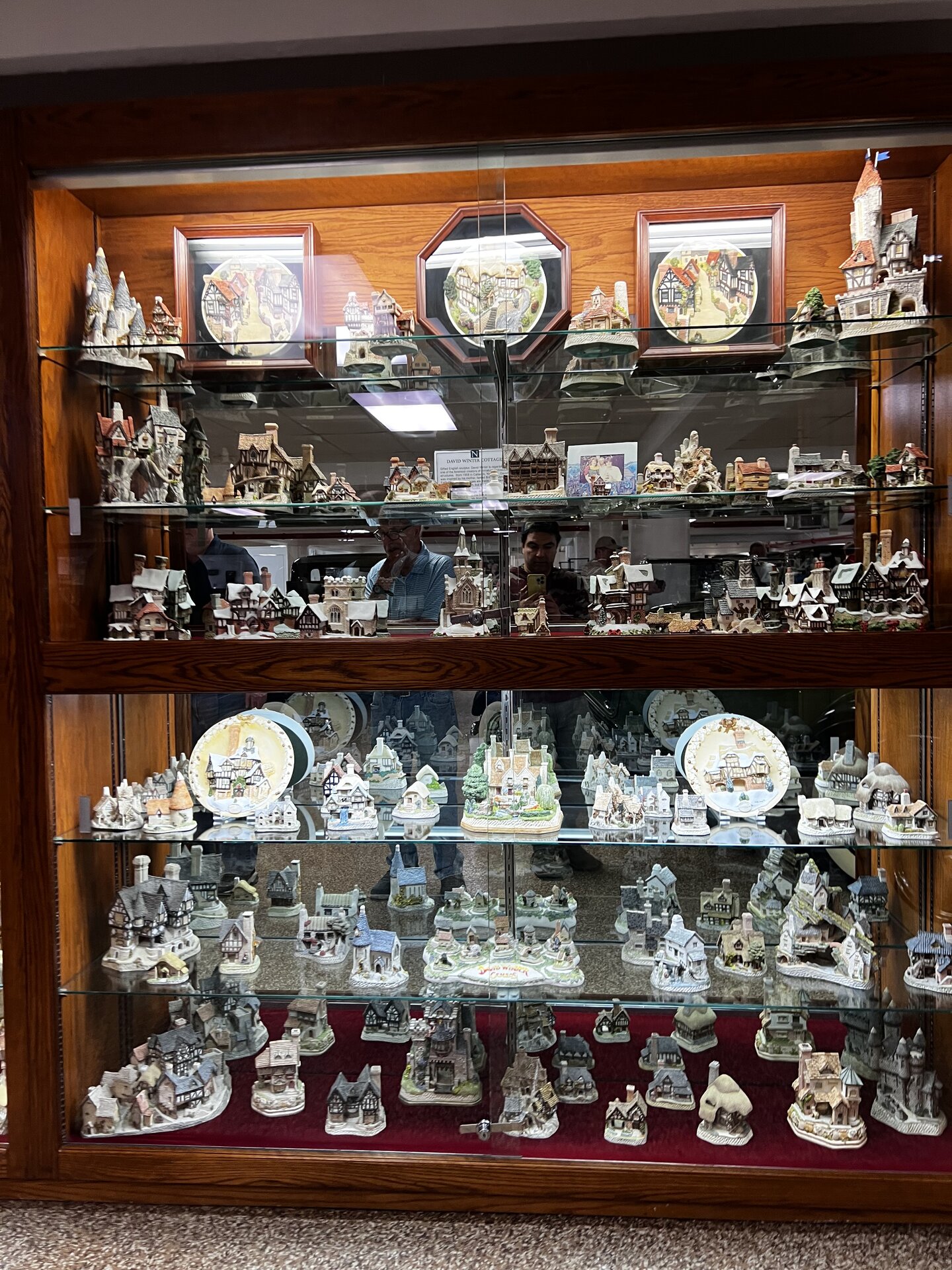
These are David Winter Cottages, hand-sculpted and hand-cast miniature English cottages produced from 1979 to 2016. Winter sculpted more than 400 different pieces over his career. More than six million were sold worldwide. The David Winter Cottages Collectors Guild peaked at over 100,000 members. He is the reason a Yorkshire studio became the reference standard for miniature architectural sculpture.
Who David Winter was.
David Winter was born in 1958 in Catterick, Yorkshire. His mother, Faith Winter, was a professional sculptor whose portrait busts of Winston Churchill and Field Marshal Montgomery are in public collections. David trained with her from childhood. In 1979, at age 21, he sculpted a Cotswold cottage in his mother's garden studio, cast it in a resin-and-crushed-stone mixture called crystacal, and painted it by hand. He and his business partner John Hine formed John Hine Studios that year in Beckenham, Kent, and put the piece on sale. It sold out. The next 37 years were a controlled expansion of that one idea.
What made the cottages different.
Every David Winter cottage was sculpted from an original clay master by Winter's own hand. Molds were then taken and used to cast the resin bodies, which were sanded, then hand-painted individually by a team of trained studio painters in Kent. No two painted pieces were identical. Each cottage was signed and numbered, with a certificate of authenticity, and typically retired from production after a defined edition size (often 3,000 to 20,000 pieces). The retired molds were destroyed on video. That combination, hand sculpture, hand paint, edition control, verified retirement, created a genuine collector market from the very first year of production.
The collectors' guild.
The David Winter Cottages Collectors Guild was founded in 1987 and at its peak in the mid-1990s had over 100,000 dues-paying members worldwide, mostly in the UK and the United States. Guild members received exclusive members-only pieces (Christmas issues, birthday issues, guild-only cottages) that today trade at multiples of their original issue price. Winter did member events, personal signings, and one-off commissions. When the market for figurines contracted in the late 1990s the Guild contracted with it, but the collector base never disappeared.
The pieces themselves.
The range covers rural English cottages (Cotswold, Devonshire, Lakeland, Yorkshire), fantasy pieces (Alice in Wonderland, Christmas), historical buildings (the Tower of London, English castles, Shakespeare's birthplace), miniature villages that fit together into a scene, and one-off large-format works that took Winter months to sculpt. Prices in production ranged from £15 for a small standard piece to £2,500 for a large limited edition. On the secondary market today a rare retired piece in mint condition with the original box and certificate can trade for £3,000 or more.
Why Winter mattered.
David Winter proved that a single sculptor working with a small studio could build a global collector market by combining technical skill, edition discipline, and honest relationships with the collector base. He did not scale by cutting corners. He scaled by hiring more painters and staying involved in every mold personally. He died on 21 July 2016 at age 58. Production continued briefly under license and then wound down. Pieces cast during his lifetime are the reference standard for the entire collectible miniature architecture category.
What Winter cottages are doing in an Explorations entry.
The Nethercutt Collection includes a display of David Winter Cottages because a museum built around handcraft recognizes handcraft when it sees it. A coachbuilt Duesenberg body and a David Winter Cotswold cottage are the same category of object: a small production run of an original design, hand-finished, edition-controlled, signed by the maker, and preserved. The Nethercutt curators treat them with the same seriousness. That is why the cottages are here. They belong in the same room as the cars.
"David Winter and Charles Sykes are the same kind of maker. One sculpted a cottage in Yorkshire, one sculpted a lady on a car. Both understood that a small original object, made honestly, can outlast the industry around it."
Omar Mukhtar, field note
Background reading
For further reading: search the public record for David Winter Cottages, and visit the Nethercutt Collection, where Omar studied and photographed this material first-hand.
Copyright
Photographs © 2026 Outonomous. All rights reserved. Image rights are held by Outonomous and may not be reproduced without written permission.